


Are You Making These Common Fence Installation Mistakes in Manchester? (And How North West Weather Makes Them Worse)

When it comes to fencing in Manchester, I've seen firsthand how our notorious North West weather can turn a simple installation mistake into a costly disaster. After 40+ years working with fencers in Manchester, I can tell you that what works perfectly in drier climates often fails spectacularly here.
The reality is this: Manchester gets an average of 150 rainy days per year, regular freeze-thaw cycles through winter, and enough wind to test even the sturdiest installations. If you're planning fence and gate installation without accounting for these conditions, you're setting yourself up for problems: and I'm here to make sure that doesn't happen to you.
Mistake #1: Skimping on Post Depth (The Biggest Problem I See)
Here's the truth: shallow post holes are the number one cause of fence failure in the North West, and I see this mistake constantly. When you're installing fencing in Manchester, the standard "dig a hole and drop in a post" approach simply won't cut it.
Why Manchester's conditions make this worse:
Our freeze-thaw cycles cause ground heaving, pushing shallow posts up and out of alignment
Waterlogged soil: common across Greater Manchester: offers far less stability than dry ground
Wind exposure in exposed areas creates enormous lateral forces on fence panels
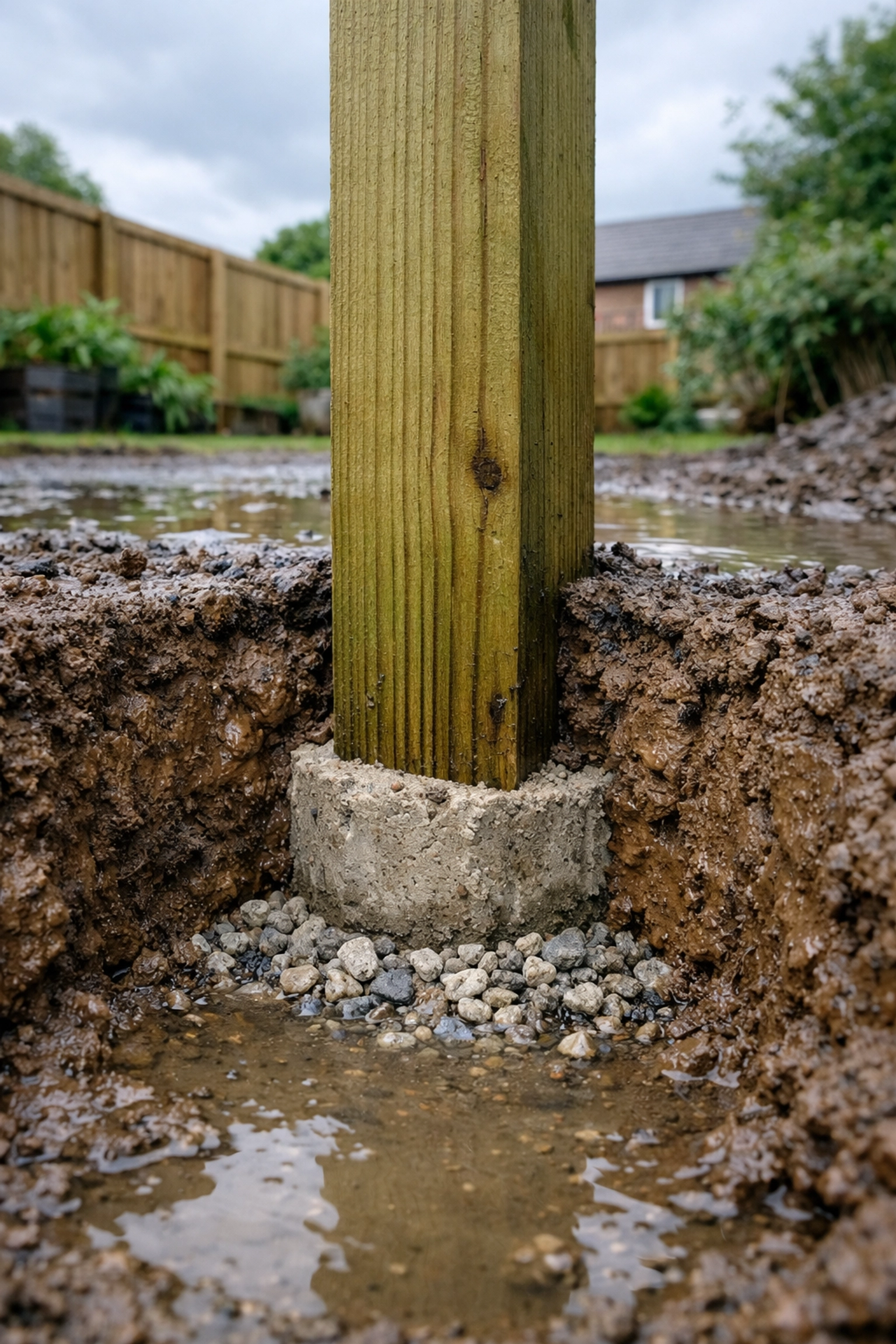
Here's what I always recommend: your posts need to go at least one-third of their length into the ground, typically 2-3 feet deep for standard garden fencing. But here's the critical part for our climate: you must dig below the frost line to prevent winter heaving.
In practice, this means:
6-foot fence panels require posts set minimum 24 inches deep
Corner and gate posts need an extra 6-12 inches
Clay-heavy soils (common in South Manchester) require even deeper installation
Posts in exposed, windy locations benefit from 30+ inch depths
I've returned to properties where DIY installers went only 18 inches deep, and within one winter, entire fence runs had shifted. Don't let that be you.
Mistake #2: Ignoring Drainage and Site Preparation
This is where Manchester weather turns a minor oversight into a major structural problem. Our rainfall doesn't just make gardens muddy: it fundamentally changes how fences perform over time.
Before any installation, proper site preparation is non-negotiable. I will guide you through what this actually means:
Essential preparation steps:
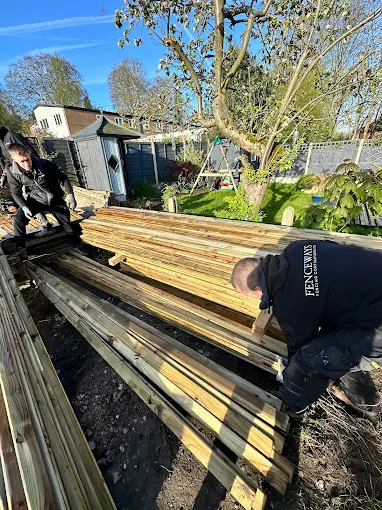
Clear all debris, vegetation, and old fence materials completely
Grade the soil to create a level surface along the fence line
Identify and fill low spots where water naturally pools
Check for underground drainage issues that might affect post stability
When you skip these steps in our wet climate, you're creating conditions for accelerated fence failure. Water pooling around fence posts leads to rot, concrete degradation, and post movement: sometimes within the first year.
Here's a specific example I always share with clients: I worked on a property in Chorlton where the previous fencing in Manchester installation had completely ignored a natural drainage path through the garden. Within 18 months, three fence posts had rotted through at ground level because water constantly pooled there. We corrected the grading, installed proper drainage, and that fence has now stood strong for over a decade.
Mistake #3: Choosing the Wrong Materials for North West Conditions
I cannot stress this enough: material selection makes or breaks fence longevity in Manchester. What works brilliantly in Surrey might fail miserably here, and I've seen countless examples of this.
The material mistakes I see most often:
Using untreated timber in exposed locations
Selecting pressure-treated wood with inadequate treatment levels
Installing softwood panels without additional weather protection
Choosing concrete that isn't rated for freeze-thaw cycles
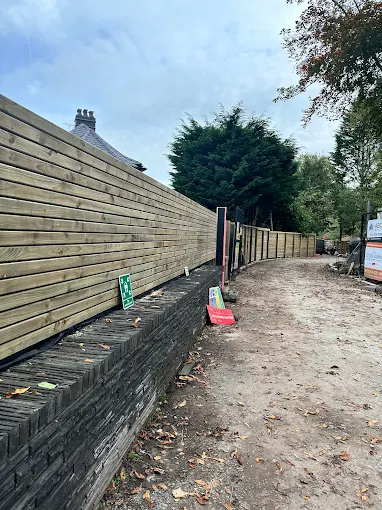
Our wet climate accelerates timber deterioration dramatically. Unprotected wood absorbs moisture, leading to warping, splitting, and rot: often within 2-3 years rather than the 10+ years you'd expect from quality materials.
Here's what I recommend for Manchester installations:
FSC-certified pressure-treated timber with minimum treatment specifications (we detail this in our sustainable fencing materials guide)
High-quality concrete rated for outdoor use in wet conditions
Galvanized or stainless steel fixings: never basic steel that rusts through
Appropriate wood preservatives for exposed grain and cut ends
Remember: spending an extra 20% on quality materials typically saves you 80% on replacement costs over the fence's lifetime.
Mistake #4: Getting Board Spacing Wrong
This is a technical detail that many DIY installers and even some inexperienced fencers in Manchester overlook, but it's crucial for our humid climate.
Wood expands and contracts with moisture content changes. In Manchester, where humidity can swing dramatically between wet winters and (occasionally) dry summers, timber fencing experiences significant movement.
Here's what happens when you install boards too tightly:
Winter swelling causes boards to buckle, creating unsightly warping
Expansion pressure can split boards or pull fixings loose
Trapped moisture between touching boards accelerates rot
Panel distortion creates gaps where there shouldn't be any
The solution is simple but requires precision: leave approximately 1/16 inch gaps between vertical boards during installation. This seems minimal, but it provides enough expansion room to prevent buckling while maintaining privacy and weatherproofing.
When I train our installation teams, I always emphasize this point: you're not just building a fence for today's conditions: you're building for every season Manchester will throw at it.
Mistake #5: Weak Gate Installation
Gates take far more punishment than fence panels, particularly in windy Greater Manchester. I've seen countless gate installations fail within months because installers didn't account for the additional stresses.
Critical gate installation requirements for Manchester conditions:
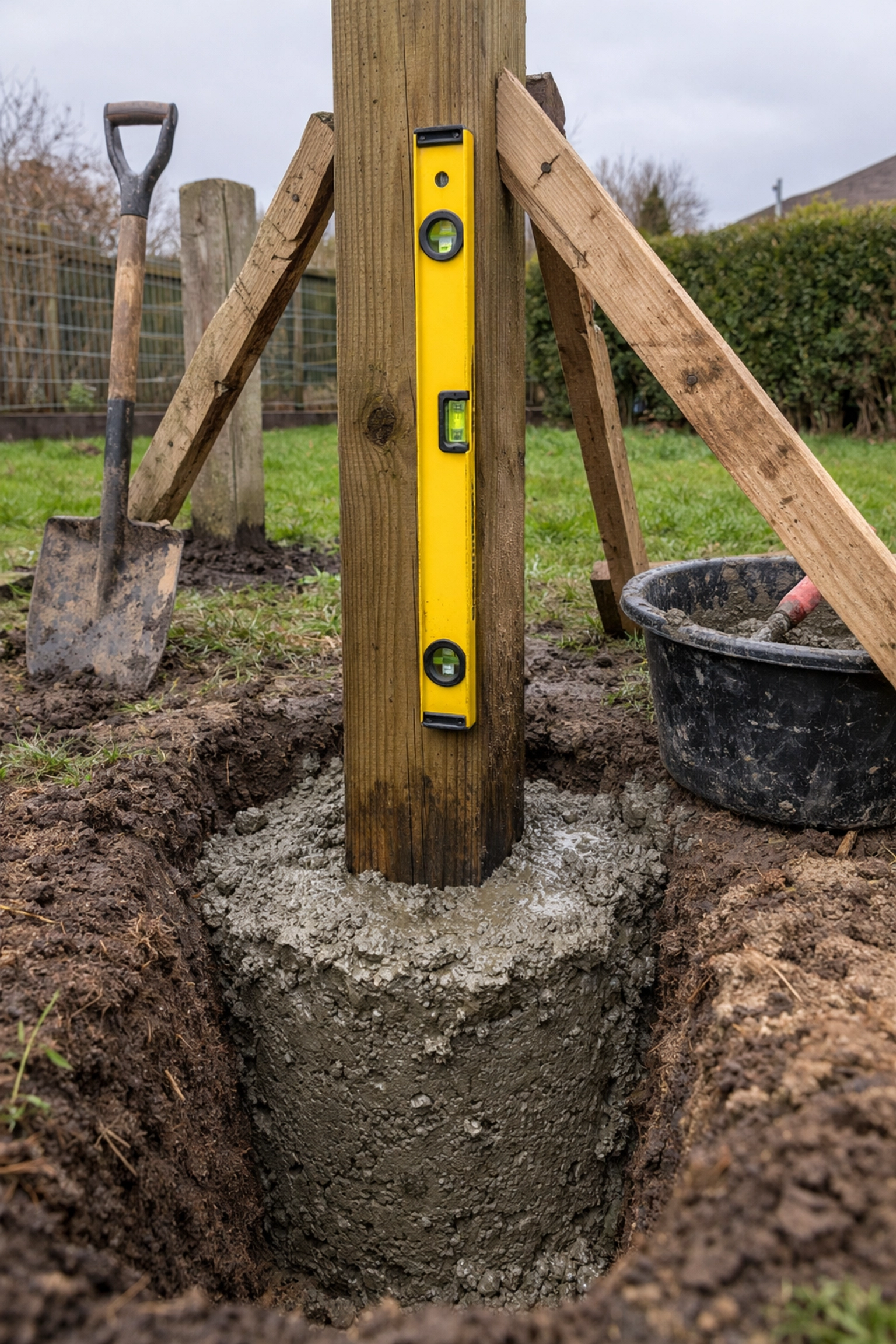
Gate posts need 50% deeper installation than standard fence posts
Concrete volume around gate posts should be doubled
Posts must be perfectly vertical: even 1-2 degrees off causes operational problems
Ground conditions matter even more: avoid areas where water naturally collects
Here's a specific issue I see constantly: gates installed on uneven ground or where water pools experience functional problems almost immediately. The moisture causes ground movement, posts shift, and suddenly your gate binds, drags, or won't latch properly.
For automated gates: increasingly popular for driveways and commercial properties: the installation requirements are even more demanding. We cover this extensively in our garden gate installation guide, but the key point is this: automation adds weight and continuous stress that manual gates never experience.
I always recommend professional installation for gates, especially automated systems, because the consequences of mistakes are immediate and expensive.
Mistake #6: Skipping the Utility Check and Regulations Review
This final mistake is potentially dangerous and definitely expensive. Before digging a single post hole, you must verify what's underground and what regulations apply.
Essential pre-installation checks:
Contact utility companies to mark underground services (electric, gas, water, telecoms)
Verify property boundaries with survey documents: never assume fence lines
Check Manchester City Council planning requirements for your area
Review height restrictions and boundary regulations (covered in our UK fence laws guide)
I've been called to properties where DIY installers struck underground cables or installed fences over boundary lines, creating legal nightmares and safety hazards. These are entirely preventable with proper planning.
The Bottom Line on Fencing Manchester Properties
Here's what I want you to take away from this: successful fence and gate installation in Manchester requires understanding and respecting our unique climate challenges. The mistakes I've outlined aren't just theoretical: I see these problems constantly, and they're almost always preventable with proper planning and execution.
After four decades working on fencing in Manchester, I can tell you that quality installation pays for itself through longevity, reduced maintenance, and better performance through our challenging weather conditions.
Whether you're considering DIY installation or hiring professional fencers in Manchester, understanding these common mistakes helps you make informed decisions. If you'd like to discuss your specific fencing project and how to avoid these pitfalls, you can explore our residential fencing options or reach out to our team directly at Fenceways Group Ltd.
Remember: your fence is a long-term investment in your property. Getting it right from the start saves you time, money, and frustration for years to come.
Comments