


Are You Making These Common Fence Installation Mistakes? (What Manchester Contractors Fix Daily)

When I pull up to a property for a repair quote, I can usually spot the problem before I've even stepped out of the van. After decades installing and fixing fences across Greater Manchester, certain mistakes appear time and time again: and they're almost always avoidable.
The truth is, fence installation looks straightforward until you're knee-deep in clay soil on a wet Tuesday in Stockport, dealing with a panel that won't sit level because someone eyeballed the post spacing. I've seen fences that have lasted barely a winter, property disputes triggered by a fence six inches over the boundary line, and posts that shifted so badly they pulled an entire run out of alignment.
Here's what I fix most often: and more importantly, how you can avoid these costly mistakes in the first place.
Mistake #1: Setting Posts Too Shallow (Or in the Wrong Place Entirely)
This is the big one. I'd estimate that 60% of the fence repairs we handle at Fenceways Group Ltd stem from posts that weren't set deep enough or weren't positioned correctly to begin with.
Here's why this matters in Manchester specifically: our clay-heavy soil expands and contracts dramatically with moisture changes. Add freeze-thaw cycles during winter, and you've got the perfect recipe for post movement. A post set only 18 inches deep might look fine in July, but come February, it's leaning like the Tower of Pisa.
What I always recommend:
Set posts at least one-third of their total height into the ground: so a 6-foot panel needs posts sunk 2 feet minimum
In areas with heavy clay (common across South Manchester, Stockport, and parts of Cheshire), I go deeper: often 2.5 feet
Posts must sit below the frost line to prevent heaving. In the UK, that's typically around 450-600mm depending on your exact location
Space posts consistently: usually 6 to 8 feet apart, measured centre-to-centre
I've pulled out posts that were set in nothing but loose backfill with no concrete. They lasted about three months before the first strong wind did its work. Concrete collars aren't optional: they're essential for long-term stability.
Mistake #2: Skipping the Property Survey (And Paying For It Later)
Few things create more stress: or cost more money to fix: than a fence installed on the wrong side of a boundary line.
I had a client in Didsbury who built a beautiful new fence, only to receive a solicitor's letter three weeks later. Turns out, the fence encroached nearly a foot onto the neighbour's land. The whole thing had to come down and be reinstalled. Total cost? Nearly double the original quote, plus the neighbour relationship was done.
Here's what you need to do:
Check your property deeds before any posts go in
If there's any doubt whatsoever, commission a professional boundary survey. It costs a few hundred quid but saves thousands in legal fees
Speak to your neighbours early. Even if you're legally entitled to build on the boundary line, a quick conversation prevents disputes
Remember: in the UK, you don't automatically own both sides of a boundary fence. Check who's responsible before making changes
In Manchester's tightly packed terraced streets and semi-detached rows, boundary lines matter enormously. I always recommend erring on the side of caution: set your fence an inch or two inside your line if there's any ambiguity.
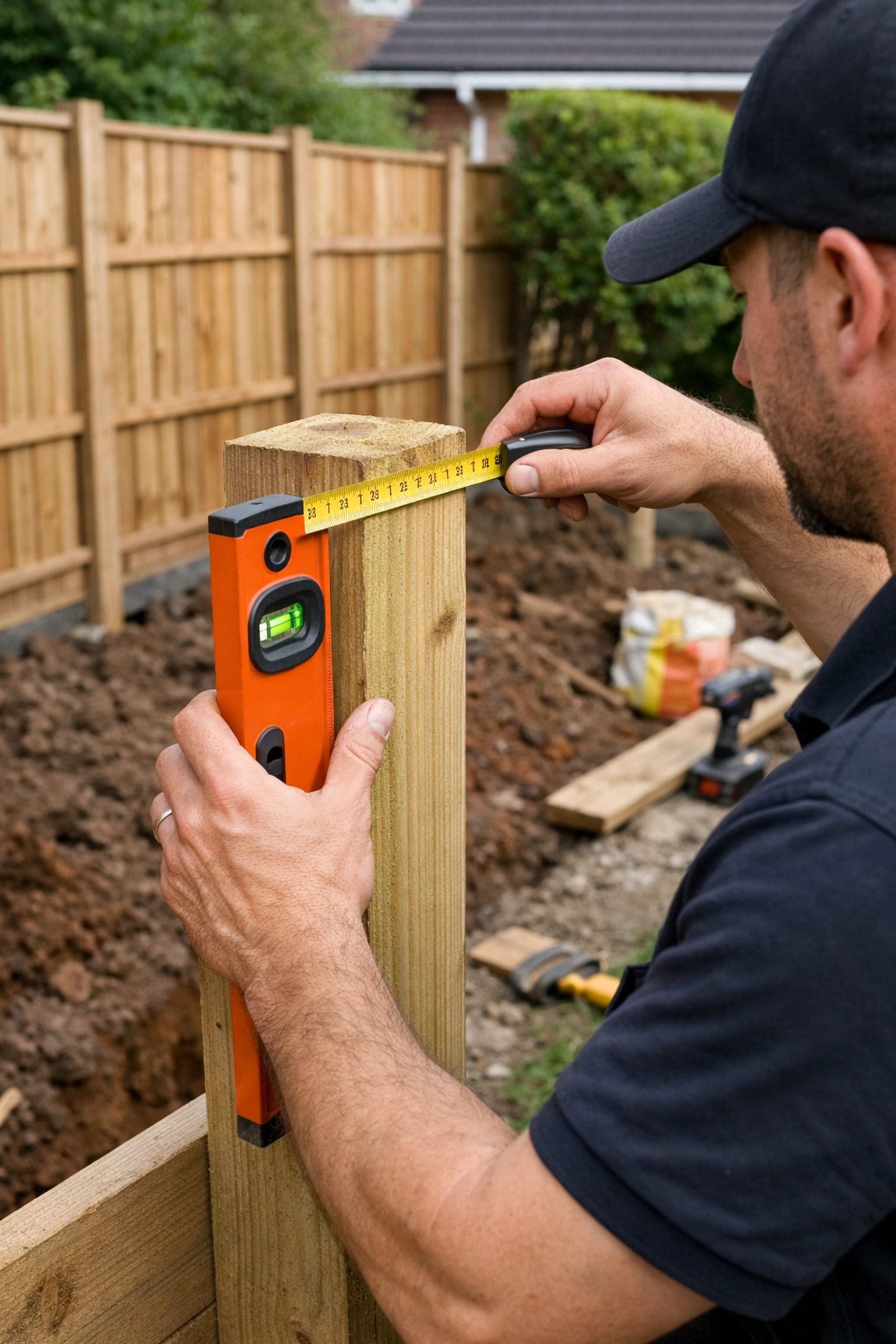
Mistake #3: Eyeballing Board Alignment (Instead of Using Proper Tools)
Walk down any residential street in Manchester and you'll spot wonky fences: panels that tilt, boards with uneven gaps, sections that clearly weren't installed with a spirit level in sight.
The problem with "close enough": misaligned boards don't just look unprofessional: they create structural weaknesses. Panels that aren't plumb put uneven stress on fixings, leading to early failure. Boards installed too tightly will buckle and warp as the timber expands and contracts with Manchester's humidity swings.

What professionals do differently:
Use a spirit level on every single post: both vertically and horizontally
Install temporary bracing to hold posts perfectly plumb while concrete sets
Leave consistent gaps between boards (roughly 1/16 inch for kiln-dried timber) to allow for expansion
Use spacers rather than guessing: it takes an extra ten minutes and saves weeks of warranty callbacks
I've replaced entire fence runs where boards were installed so tightly that the first autumn rainstorm caused them to buckle and split. Wood moves. Plan for it.
Mistake #4: Choosing the Wrong Materials for Manchester Weather
Here's a conversation I have at least twice a week: "Why has my fence rotted after only three years?"
The answer is almost always the same: untreated or poorly treated timber, combined with our famously damp climate.
Manchester's weather is tough on fences. We get significant rainfall (around 800-900mm annually), high humidity, and temperature fluctuations that stress timber. If you're using standard untreated softwood without proper protection, you're asking for trouble.
Material mistakes I see regularly:
Using untreated timber for ground-contact posts
Skipping post-installation treatment and sealing
Installing non-galvanised fixings that rust and stain within months
Choosing the cheapest option without considering durability
What I recommend instead:
Pressure-treated timber rated for ground contact (minimum UC4 for posts)
Quality timber stain or preservative applied within the first few months
Galvanised or stainless steel fixings throughout
FSC-certified timber when sustainability matters to you
At Fenceways, we back qualifying installations with a 10-year warranty because we use materials engineered to last in UK conditions. The upfront cost difference between budget and quality materials is maybe 15-20%, but the lifespan difference is easily double.
Mistake #5: Installing on Unprepared or Uneven Ground
I've lost count of how many times I've been called to fix a fence where the installer simply banged posts into whatever ground was there: rubble, tree roots, uneven slopes: without any preparation.
Why this matters: unstable ground = unstable fence. Posts shift, panels gap, and the entire structure weakens over time.
Common ground preparation mistakes:
Not clearing vegetation, roots, or debris from the fence line
Failing to level the ground or account for slopes properly
Ignoring drainage issues that pool water around posts
Starting installation without marking the full fence run first
The professional approach:
Clear and level the fence line before any digging starts
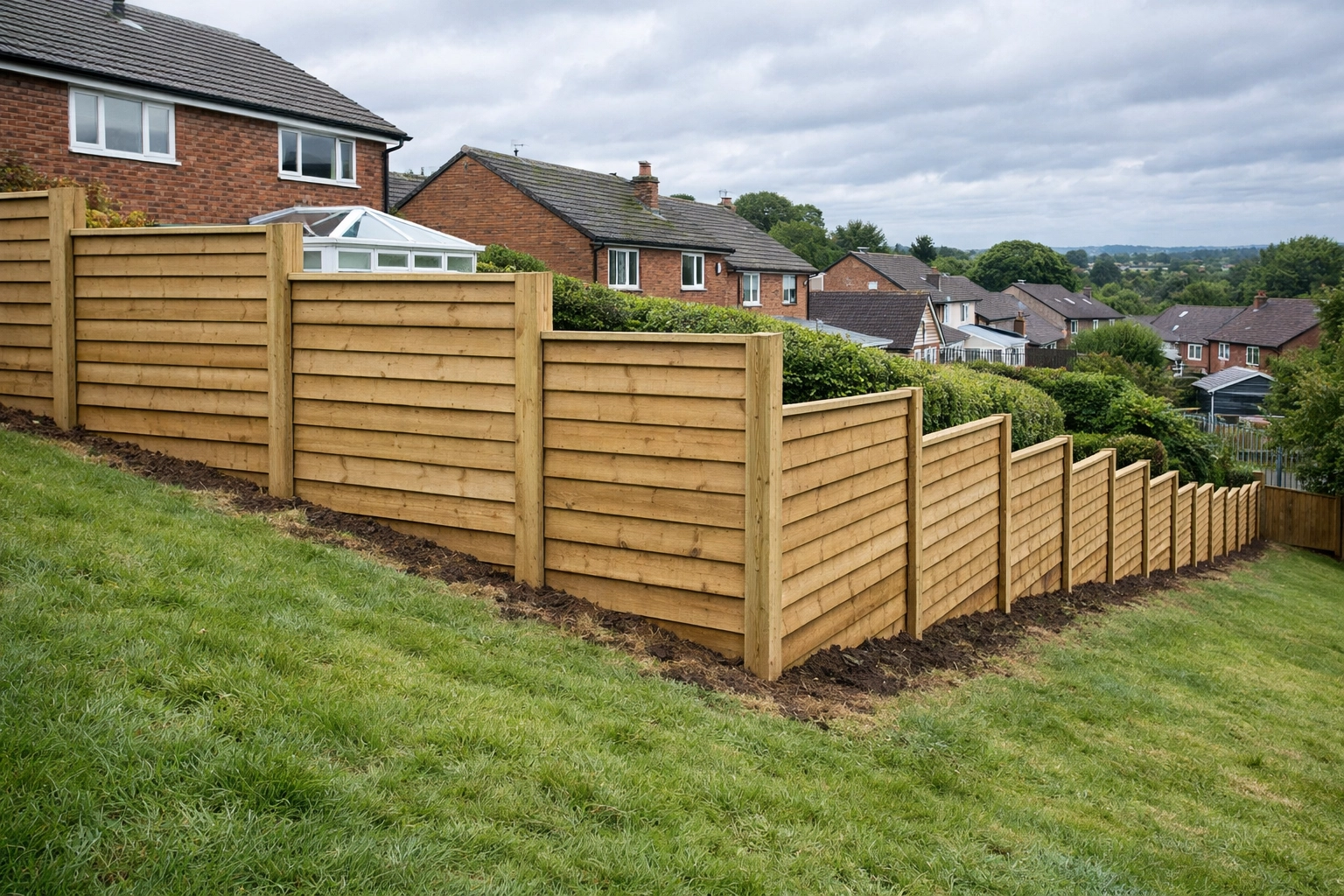
Plan for sloped ground with stepped panels rather than trying to force level runs
Improve drainage around posts if ground is particularly wet
Mark out the entire installation with string lines to check alignment before committing
On sloped properties across areas like Prestwich or the outskirts near the Pennines, stepped panels are essential. Trying to follow the slope with standard panels creates gaps underneath and looks amateur.
Mistake #6: Ignoring Building Regulations and Permits
"Do I really need planning permission for a garden fence?"
The answer is usually no: but there are important exceptions, and ignoring them can result in enforcement notices and forced removal.
When you DO need permission in Manchester (and across the UK):
Fences over 2 metres high
Fences over 1 metre high next to a highway (including footpaths)
Any fence in a conservation area or on a listed building
Certain commercial or industrial fencing installations
I recently worked with a commercial client in Salford who assumed their 2.5-metre security fence didn't need approval. The council disagreed. We had to submit retrospective planning permission, which delayed their project by weeks and added unnecessary costs.
Here's what I always advise:
Check with Manchester City Council (or your local authority) before starting
If you're anywhere near a conservation area, get written confirmation
For commercial projects, factor planning into your timeline
Don't rely on "I've seen similar fences nearby": regulations change, and enforcement is inconsistent
What Contractors Look For During Repairs
When I survey a failed fence, I'm checking a predictable list:
Post depth and concrete quality (usually the culprit)
Alignment and plumb (spirit level tells the story immediately)
Fixings condition (rust stains = trouble)
Material condition (rot, warping, splitting)
Ground movement or settlement
Evidence of poor installation technique
Most failed fences share a common thread: someone cut corners during installation to save time or money. But here's the reality: a proper installation might take an extra day and cost a bit more, but it lasts 15-20 years instead of 3-5 years.
That's the difference between a fence that's an asset and one that becomes an expensive recurring headache.
Getting It Right the First Time
Look, I've been doing this since Fenceways Group Ltd was established in 1983 in Manchester. I've installed thousands of metres of fencing across domestic gardens, commercial properties, schools, and industrial sites. The shortcuts never pay off.
If you're planning a fence installation: whether DIY or hiring contractors: take the time to do it properly:
Get your boundaries confirmed
Use quality materials suited to our climate
Set posts deep and plumb with proper concrete
Plan for ground conditions and drainage
Check if you need permits
Don't eyeball measurements: use tools
And if you're not confident handling it yourself? That's what we're here for. A professional installation costs more upfront but delivers decades of reliable service, backed by warranty and expertise.
Remember: the most expensive fence isn't the one that costs the most to install: it's the one you have to replace three years later.
Comments