


How to Choose Wildlife-Friendly Commercial Fencing That Actually Meets UK Security Standards

When I first started advising Manchester businesses on commercial fencing solutions, I never imagined I'd be discussing hedgehog highways and deer corridors in the same conversation as security ratings and anti-climb features. But here we are in 2025, and wildlife-friendly commercial fencing isn't just a nice-to-have: it's becoming essential for businesses that want to balance environmental responsibility with robust security.
The challenge is real: how do you protect your Manchester commercial property while ensuring local wildlife can move freely through your area? I've worked with dozens of businesses across Greater Manchester who thought they had to choose between effective security and environmental stewardship. The truth is, you don't have to compromise on either.
Why Wildlife-Friendly Commercial Fencing Matters in Manchester
Manchester's urban landscape is home to more wildlife than most business owners realise. From hedgehogs navigating industrial estates in Trafford Park to foxes crossing commercial developments in Salford, our city's wildlife needs safe passage routes to survive and thrive.
I've seen firsthand how traditional commercial fencing can create deadly barriers for local wildlife. Chain-link fences trap small mammals, barbed wire causes serious injuries, and solid barriers fragment habitats that took decades to establish. But I've also witnessed how the right wildlife-friendly fencing approach can actually enhance your property's security while supporting Manchester's biodiversity.
Here's what makes this approach so compelling for Manchester businesses:
Enhanced corporate reputation with environmentally conscious clients and partners
Potential planning advantages when local authorities favour eco-friendly developments
Long-term cost savings through reduced maintenance and wildlife damage
Compliance with emerging environmental regulations before they become mandatory
Essential Design Features for Wildlife-Friendly Security Fencing
After years of working with fencing contractors in Manchester, I've identified the key design elements that successfully balance wildlife access with commercial security needs.
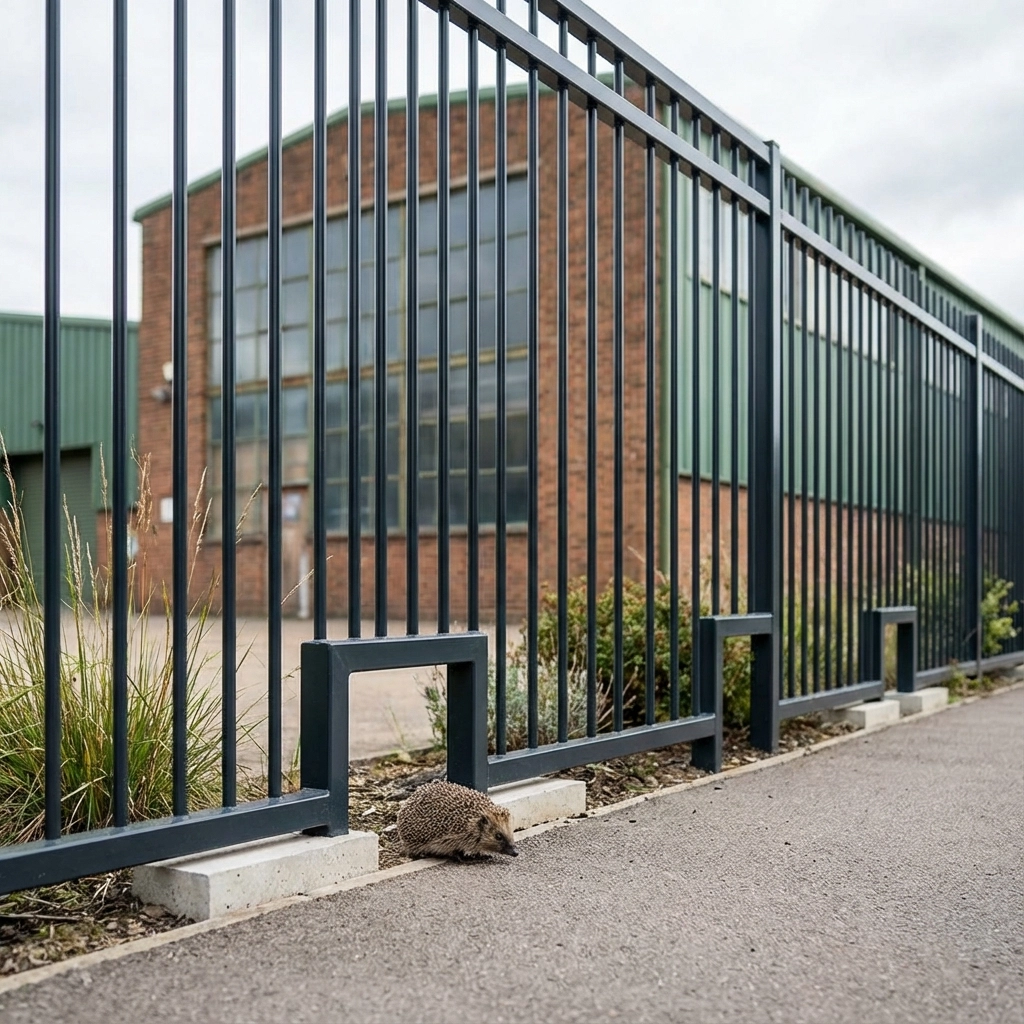
Vertical Bar Systems: Your Best Security Investment
I always recommend vertical bar fencing systems like bowtop railings for commercial properties seeking wildlife-friendly solutions. Unlike chain-link alternatives, these systems allow small mammals like hedgehogs to pass between the vertical pales without compromising your security perimeter.
The beauty of vertical bar systems lies in their simplicity: they create an effective psychological and physical barrier for human intruders while remaining permeable to wildlife. I've installed these systems at warehouses, office complexes, and retail parks across Manchester with excellent results.
Strategic Gap Planning
Here's where precision matters most. I recommend incorporating ground-level gaps of approximately 13cm by 13cm: large enough for hedgehogs, frogs, and other small wildlife to pass through, but small enough to prevent unauthorised human access or pet escapes.
These gaps should be positioned strategically:
Every 10-15 metres along straight fence runs
At natural wildlife corridors identified during site surveys
Away from main security zones like entry points and sensitive areas
Material Selection That Works
When advising Manchester businesses on fence and gate installation, I emphasise the importance of smooth materials throughout your system. Rough textures can injure animals, while sharp edges create unnecessary hazards.
Key material considerations include:
Galvanised steel with smooth finishes for durability
Powder-coated options that resist corrosion in Manchester's wet climate
Rounded post tops to prevent injury to climbing animals
Smooth wire specifications if wire elements are necessary
UK Security Standards You Can't Ignore
While wildlife-friendliness is important, your Manchester commercial property still needs to meet UK security requirements. I work closely with security consultants to ensure every wildlife-friendly installation maintains appropriate protection levels.
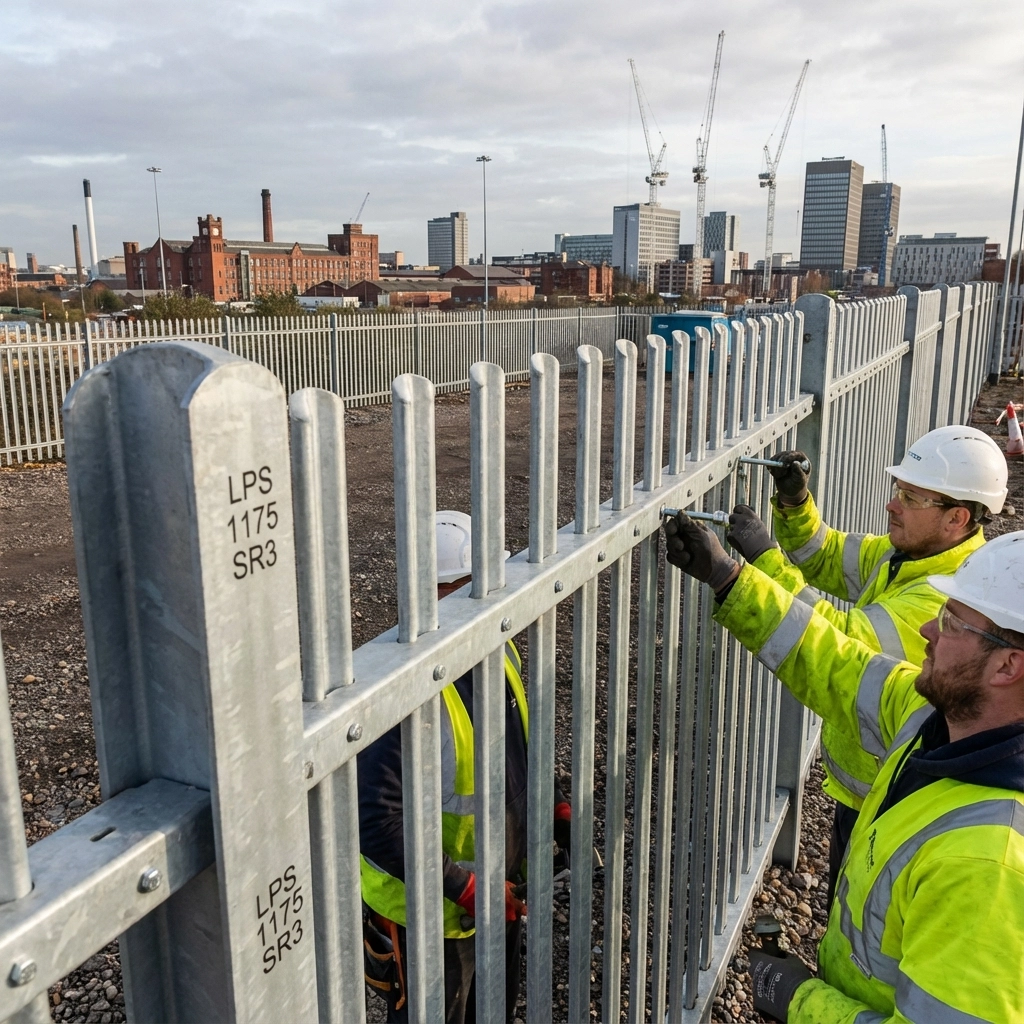
LPS 1175 Compliance Options
For high-security applications, certain LPS 1175-rated systems can be adapted for wildlife compatibility. I've successfully implemented SR1 and SR2-rated vertical bar systems that incorporate wildlife passages without compromising their security certification.
The key is working with experienced fence gate installers who understand both wildlife requirements and security standards. Not every fencing contractor in Manchester has this dual expertise, so choosing the right partner is crucial.
Height and Visibility Considerations
UK commercial fencing typically requires minimum heights of 1.8-2.4 metres depending on your risk assessment. Wildlife-friendly systems can meet these requirements while incorporating features like:
Visibility markers to help nocturnal animals avoid collisions
Graduated height transitions near wildlife corridors
Anti-climb additions that don't harm wildlife (curved rather than spiked)
Practical Implementation for Manchester Businesses
Let me walk you through the practical steps I follow when implementing wildlife-friendly commercial fencing projects across Manchester.
Site Assessment First
I always begin with a comprehensive site survey that identifies:
Existing wildlife movement patterns through observation and tracking
Local species present that require specific accommodation
Security risk areas that need enhanced protection
Seasonal considerations affecting wildlife behaviour
This dual approach ensures your fencing solution addresses both security and environmental needs effectively.
Timing Your Installation
Manchester's wildlife follows predictable seasonal patterns, and I always recommend timing installations to minimise disruption:
Late summer/early autumn for most commercial projects
Avoid February-July during peak breeding and nesting seasons
Consider migration patterns for species like bats and birds
Plan around hedgehog hibernation periods (November-March)
Working with Qualified Contractors
Not all companies that build fences in Manchester have experience with wildlife-friendly systems. When selecting contractors, I recommend asking about:
Previous wildlife-friendly commercial installations
Understanding of local species requirements
Familiarity with UK environmental regulations
Ability to work with ecological consultants
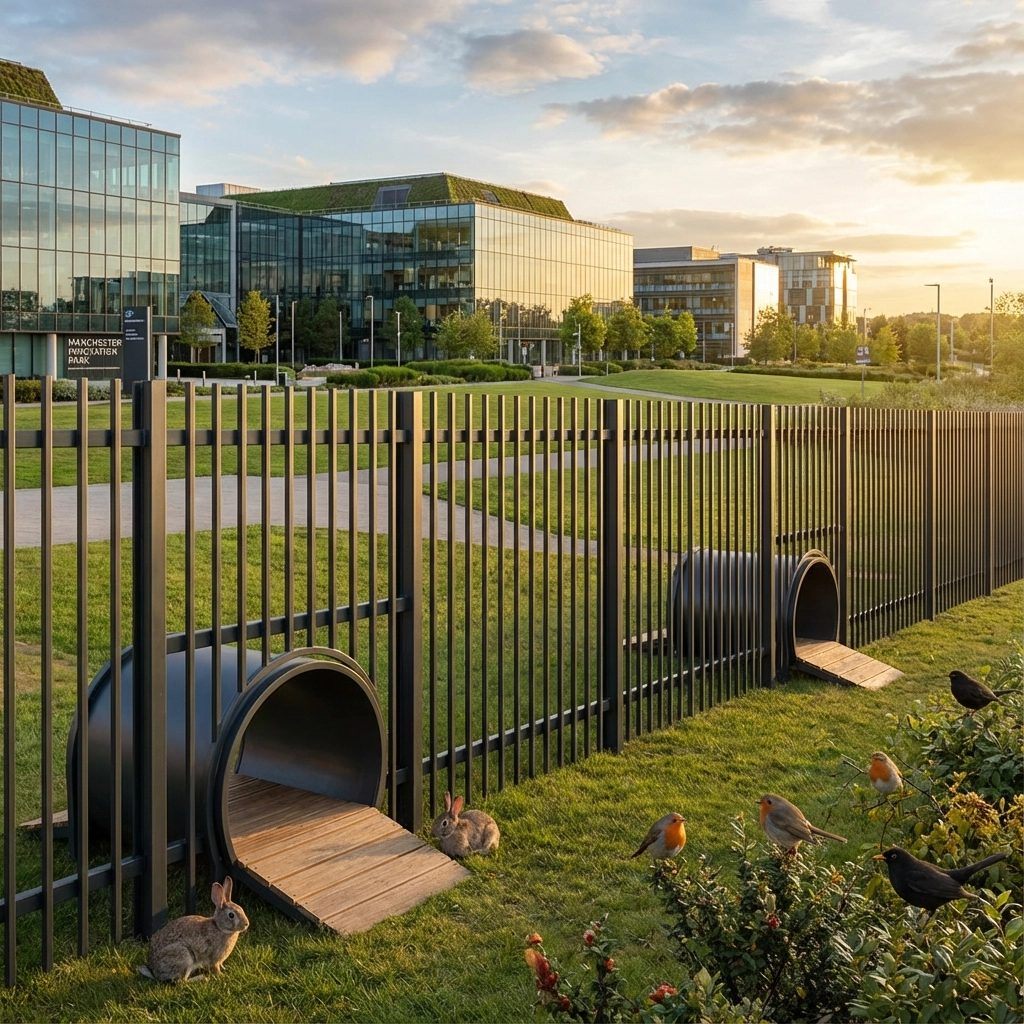
Real-World Applications Across Manchester
I've implemented wildlife-friendly commercial fencing solutions across various Manchester sectors, each with unique requirements and challenges.
Industrial Estates and Warehouses
Trafford Park presents particular challenges with its mix of heavy industry and surprising wildlife diversity. I've installed vertical bar systems with hedgehog passages for several logistics companies, creating secure perimeters that don't interrupt established wildlife corridors.
The key success factor here is positioning wildlife passages away from loading areas while maintaining continuous habitat connectivity.
Office Parks and Business Developments
Manchester's expanding business districts often sit adjacent to green spaces and residential areas with active wildlife populations. For these locations, I recommend sophisticated manchester fencing solutions that blend security with aesthetic appeal.
Timber-effect commercial fencing with integrated wildlife features works particularly well for professional environments where corporate image matters alongside environmental responsibility.
Retail and Mixed-Use Developments
Shopping centres and retail parks require robust security while maintaining public appeal. I've found that wildlife-friendly features actually enhance customer perception of environmentally responsible businesses.
Maintenance and Long-Term Success
Wildlife-friendly commercial fencing requires slightly different maintenance approaches compared to traditional systems. I always provide Manchester clients with specific maintenance protocols:
Regular Inspection Points
Monthly checks of wildlife passages for blockages or damage
Seasonal assessments of vegetation growth affecting fence lines
Annual wildlife corridor reviews to assess usage patterns
Security system integration checks to ensure wildlife features don't compromise protection
Adaptive Management
The most successful wildlife-friendly installations evolve over time based on observed wildlife behaviour and changing security needs. I recommend annual reviews with both security specialists and ecological consultants to optimise your system's performance.
Making the Right Choice for Your Manchester Business
Choosing wildlife-friendly commercial fencing that meets UK security standards isn't just about ticking environmental boxes: it's about creating sustainable infrastructure that serves your business needs for decades to come.
I've guided hundreds of Manchester businesses through this decision process, and the most successful implementations share common characteristics: thorough planning, qualified installation partners, and commitment to long-term maintenance.
When you're ready to explore wildlife-friendly commercial fencing options, I recommend starting with a professional consultation that addresses both your security requirements and local wildlife considerations. The right fencing contractor manchester will help you navigate the complexities while delivering a solution that protects both your business and Manchester's natural heritage.
Remember, wildlife-friendly doesn't mean security-compromised. With proper design and implementation, you can achieve both goals effectively while positioning your Manchester business as an environmental leader in your sector.
Comments