


Back to School: 10 Things You Should Know About Playground Fencing and UK Safety Standards in 2026

When it comes to preparing your school site for a new academic year, perimeter safety should be treated as a priority: not an afterthought. Few investments offer greater protection for pupils, staff, visitors and school property than a properly specified and professionally installed fencing and gate system.
I have seen firsthand how small defects can become significant safety and safeguarding concerns. A gate that no longer closes, a damaged mesh panel or a gap beneath a fence may appear minor during the summer break, but each can affect supervision, access control and your duty of care.
As a school facility manager, bursar or business manager, you need fencing that is safe, durable, compliant and suitable for daily school-yard use. Here are 10 things you should know before reviewing your site this September.
1. September is the right time for a full perimeter safety review
The start of the academic year brings new pupils, new staff, changed routines and increased movement around your site. It is also a practical opportunity to inspect fencing before winter weather and heavy daily use expose weaknesses.
I recommend beginning with a structured walkaround that covers:
Main pedestrian entrances and reception approaches
Nursery and primary play areas
Sports pitches and outdoor learning spaces
Service yards and delivery routes
Boundaries next to roads, footpaths and neighbouring properties
Areas hidden from staff supervision
Vehicle gates and emergency access points
Fence lines affected by trees, vegetation, flooding or ground movement
Look for leaning posts, corrosion, sharp edges, loose fixings, broken mesh, damaged timber, climbable objects and gates that do not close or latch correctly.
A documented inspection also gives governors, trustees and insurers a clear record of the steps you have taken to manage risk.
2. You need to understand which standards apply to your site
There is no single “school fence law” covering every UK school. The correct specification depends on the fence’s purpose, its location and the age and needs of the children using the area.
For schools in England, the Department for Education’s 2026 design standards apply to relevant school construction and refurbishment projects. The DfE requirements reference standards including:
BS 1722 for fence construction
BS EN 1176 principles for playground safety
BS 8613 and BS 5709 where inclusive access and barriers are relevant
LPS 1175 where enhanced security performance is required
The Keeping Children Safe in Education 2026 guidance is also in force from 1 September 2026 in England. It does not prescribe one fence height for every school, but it reinforces the need for effective safeguarding arrangements and secure premises.
Standards are not a substitute for a site-specific risk assessment. I always recommend consulting a fencing specialist, the responsible person for health and safety and your safeguarding lead before finalising a design.
3. Anti-climb design is essential for safeguarding
A school fence must do more than mark a boundary. It should help prevent children climbing out, unauthorised visitors climbing in and objects being passed through the perimeter.
Good anti-climb design generally means:
No horizontal rails that create footholds
No exposed cross-bracing close to children’s play areas
No accessible gate hinges or projecting hardware
No nearby bins, benches, storage boxes or landscaping that assist climbing
Secure fixings that cannot be easily removed
Gates that match the security and anti-climb performance of the fence
For secure perimeter lines on relevant new school projects, DfE specifications may require fencing around 2.4 metres high, often using anti-climb weldmesh with no horizontal footholds. Internal play-area fencing is different: RoSPA guidance commonly recommends a minimum height of 1 metre for children’s play areas.
The correct height is therefore determined by function. A boundary around a reception play space should not automatically be designed like a high-security perimeter around a power station.
4. Open sightlines are as important as physical strength
A high fence can improve security, but a visually solid barrier may reduce supervision. Staff need to see children approaching gates, moving around play areas and interacting near boundaries.
For many schools, rigid mesh or weldmesh panels provide an effective balance because they:
Deter climbing
Allow staff to maintain clear sightlines
Make unusual activity easier to identify
Reduce hidden corners around play spaces
Let natural light into outdoor areas
Support a more open and welcoming environment
The fence should be considered alongside the layout of play equipment, planting, storage and seating. A technically strong fence can still create a safeguarding weakness if it leaves blind spots.

5. Choose the fencing system around the actual risk
There is no universal best fence for every school. I recommend choosing the system after considering pupil age, site location, vandalism risk, security requirements and visual expectations.
Anti-climb weldmesh
Weldmesh is often suitable for school boundaries because it combines strength, visibility and resistance to climbing. Smaller apertures can make it difficult to gain hand or footholds, while rigid panels are harder to bend or cut than lighter mesh.
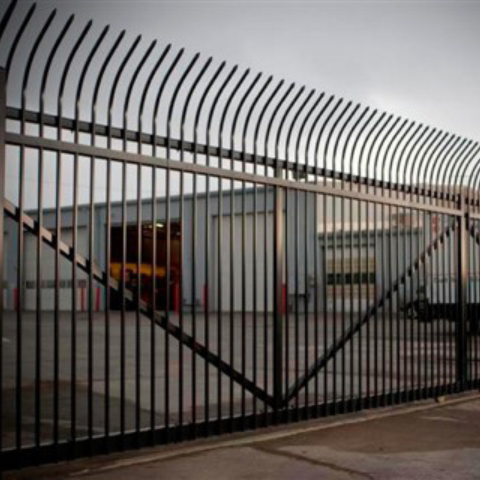
Palisade fencing
Palisade fencing offers a robust option for higher-risk boundaries, service yards and areas requiring a stronger visual deterrent. However, pointed or spiked features may not be appropriate next to children’s play areas. The design must avoid creating injury risks and should be separated from pupil activity where necessary.
Other high-security systems
Depending on the risk assessment, schools may consider:
Higher-security mesh panels
Anti-ram or reinforced vehicle gates
Security-rated fencing systems
Controlled-access pedestrian gates
Automated gates for service and delivery areas
Rising bollards where vehicle intrusion is a concern
The important question is not simply, “Which fence is strongest?” It is, “Which system controls the identified risks without creating new hazards?”
6. Gaps, heights and entrapment risks must be checked carefully
Children interact with fencing differently from adults. They climb, lean, run fingers through apertures and test gates repeatedly. This means seemingly harmless design details deserve close attention.
Your review should consider:
Gaps between vertical bars or mesh elements
Openings beneath fences and gates
Spaces between a gate leaf and its posts
Hinges, latches and closing edges
Sharp projections, cut wire or damaged welds
Timber splinters and exposed nails
Clothing-entanglement points
Where playground entrapment principles apply, designers commonly work to gaps of approximately 89mm or less between vertical elements to reduce head and neck risks. Some project specifications use a 100mm limit, so the applicable requirement should be confirmed for your particular installation.
For relevant DfE secure-line gates, the design must prevent a 100mm sphere passing underneath when closed. Your installer should also check finger traps, shear points and clearances throughout the gate’s entire movement: not only when it is fully open or closed.
7. Gates should close reliably and control access
A gate left open can undermine an otherwise secure perimeter. For play areas, self-closing gates are strongly recommended because they help contain children and keep animals out.
A suitable pedestrian gate may need:
A self-closing mechanism
A controlled closing speed
A child-safe latch or lock
A clear opening suitable for pushchairs and wheelchair users
Safe opening direction
Protection against finger entrapment
Easy operation for authorised staff
Auto-locking and access-control systems are especially useful at main entrances, service yards and boundaries adjacent to public areas. They should be selected around your safeguarding procedures, evacuation arrangements and emergency access requirements.
Remember that security must not prevent emergency services or authorised responders from accessing the site quickly. This is where a properly designed access-control plan matters.
8. Vehicle gates need their own risk assessment
Schools often share space between children, pedestrians, delivery vehicles, contractors and staff cars. A vehicle gate that works well for a warehouse may be unsuitable if it opens across a pupil route.
I recommend reviewing:
Delivery times and vehicle movements
Reversing areas and visibility
Pedestrian segregation
Drop bolts and ground sockets
Gate stops and restraint devices
Warning signs and access controls
Emergency-service access
Automated gate safety systems
Manual override arrangements during power failure
Where powered or mechanically assisted gates are installed, mechanical safety requirements and the manufacturer’s instructions must be considered. Professional installation is particularly important because poor alignment or faulty automation can create crushing, impact or trapping hazards.
9. Material selection affects safety, maintenance and value
School fencing must survive rain, frost, ball impact, accidental contact, vandalism and years of daily use. Low upfront cost can become poor value if panels require frequent repairs.
For metal systems, I recommend asking about:
Galvanised steel
Suitable powder-coated finishes
Corrosion resistance
Robust post foundations
Replacement-panel availability
Secure, tamper-resistant fixings
Where appearance matters: particularly at primary schools, nurseries or heritage sites: FSC-certified timber can provide a warmer, more welcoming boundary. Timber requires more ongoing inspection than some metal systems, but it can deliver excellent visual results when properly treated, installed and maintained.

10. Professional installation and maintenance protect your assurance position
DIY installation or an unvetted contractor may seem economical, but a school needs more than a completed fence. You need evidence that the system was correctly designed, installed and handed over.
A professional contractor should provide:
A clear written specification
Site-specific risk considerations
Competent installation teams
Safe working methods
Appropriate insurance and documentation
HSE-compliant installation procedures
Inspection and handover information
Maintenance recommendations
A meaningful warranty
At Fenceways Group Ltd, we bring more than 40 years of fencing experience, nationwide coverage and specialist commercial and industrial capability to school projects. Our HSE and in-house legal teams provide an additional corporate assurance measure, helping ensure that projects are properly managed and that the right response is available should an incident or unforeseen event occur.
Our installations are backed by a 10-year warranty, giving you greater confidence than a short-term repair or low-cost installation with no meaningful aftercare.
Your school-year maintenance checklist
Schedule routine checks throughout the year and record the findings. Include:
Weekly or fortnightly visual checks: gates, latches, obvious damage and sharp edges
Monthly checks: posts, fixings, hinges, ground clearances and vegetation
Seasonal checks: corrosion, storm damage, waterlogging and ground movement
Termly safeguarding review: sightlines, climbing opportunities and unauthorised access points
Annual competent inspection: overall condition, compliance concerns and repair priorities
Address minor defects promptly. A loose hinge or damaged panel is usually easier and less expensive to repair before it becomes a failed gate or open boundary.
Arrange your school perimeter survey before winter
Your school’s fence should support safeguarding, supervision, access control and long-term value. The right answer may be a carefully planned combination of weldmesh, palisade, timber, self-closing pedestrian gates and controlled vehicle access.
I will guide you through the options, explain the technical details in plain English and help you identify practical priorities for your site.
Contact Fenceways Group Ltd to arrange a school fencing site survey. With more than 40 years’ expertise since 1983, nationwide coverage, FSC-certified timber options and a 10-year warranty, we can help you begin the new school year with a safer, more dependable perimeter.
Useful references
Comments