


Securing the Infrastructure of Tomorrow: Why Perimeter Security is the First Line of Defense for UK Data Centres
- Mark Day
- Feb 3
- 6 min read

When it comes to protecting critical national infrastructure, I've learned one fundamental truth over four decades in this industry: the battle is won or lost at the boundary. UK data centres are no longer "just" buildings full of servers. They're critical national infrastructure, supporting everything from banking and healthcare to logistics and government services. As demand rises, so do the risks: trespass, theft, vandalism, protest activity, and targeted intrusion. In this environment, perimeter security isn't a nice-to-have. It's the first line of defence, and often the difference between a contained incident and a costly operational disruption.
At Fenceways Group Ltd, I've spent over 40 years designing and installing fencing and gate systems for high-risk sites across the UK. From industrial estates and logistics hubs to more sensitive environments, I've learned one key truth: a strong perimeter is not a single product: it's a joined-up system that matches the site's threat profile, layout, and operational needs.
Why the Perimeter Matters More Than Ever
Most security strategies follow a layered approach: deter, delay, detect, and respond. The perimeter sits at the front of that model. Done properly, it creates both a physical and psychological barrier against intrusion. I've seen firsthand how robust perimeter measures like high-security fencing and monitored access points don't just stop intruders: they deter them from even attempting entry in the first place.
Here's why this matters for data centres specifically:
Time is your greatest asset: Every second an intruder spends attempting to breach the perimeter gives your security team time to respond, assess the threat, and coordinate with law enforcement if needed
Visibility equals control: A well-designed perimeter provides clear sight lines and eliminates blind spots where threats can develop undetected
Cost-effectiveness: Preventing a breach at the boundary is exponentially cheaper than dealing with internal security incidents, data loss, or operational downtime
Compliance support: Many insurance providers and regulatory frameworks now mandate specific perimeter security standards for critical infrastructure
The primary aim is to impede intruders by making unauthorised entry costly in terms of time and effort. I always tell clients: if someone is determined enough with unlimited time and resources, they can breach anything. But your job: and mine: is to make that process so difficult, so time-consuming, and so obvious that they either give up or get caught trying.
The Multi-Layered Approach: Beyond Just Fencing
I will guide you through what genuine perimeter security looks like for a high-security data centre. Modern data centre perimeter security integrates multiple components rather than relying on fences alone. When I survey a site, I'm looking at how all these elements work together as a cohesive system:
Physical Barriers That Actually Work
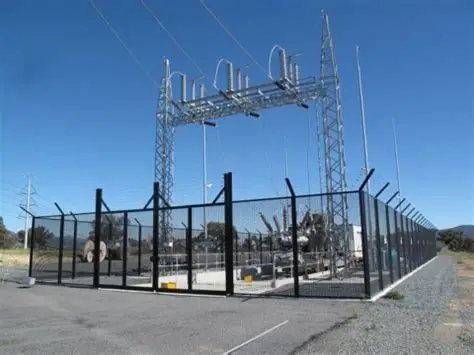
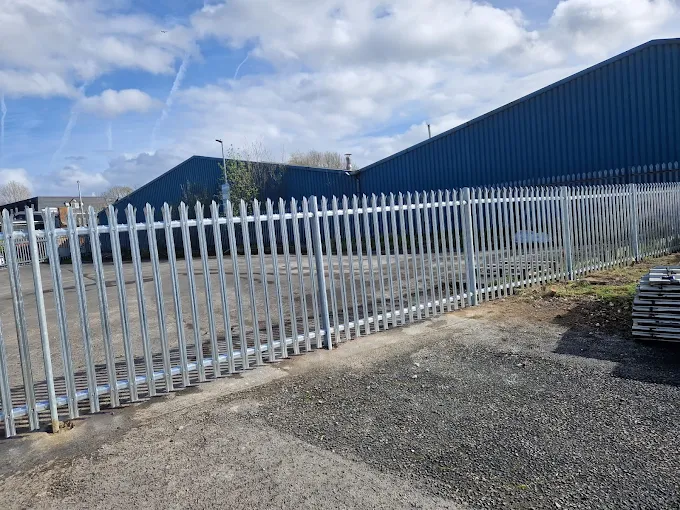
The foundation layer consists of certified high-security fencing systems. I recommend welded mesh panels with anti-climb and anti-cut properties: typically 3-4 metres high, sometimes topped with cranked arms featuring either barbed wire or more sophisticated options. For the most sensitive sites, I've specified two-fence designs with sterile zones of 6-10 metres between them. This staged approach gives security teams multiple opportunities to identify and deny unauthorised visitors access before they reach critical infrastructure.
But here's what many people miss: the barrier is only as strong as its installation. Poor groundworks, inconsistent post spacing, or weak gate integration creates vulnerabilities that determined intruders will find and exploit. That's where 40 years of practical experience becomes invaluable: knowing how to detail corners, transitions, and access points so there are no weak links.
Detection and Monitoring Systems
Layered sensor systems work across managed zones to detect intrusions while maintaining low false alarm rates. I've seen too many facilities invest heavily in detection technology only to have teams ignore alerts because of constant false alarms from wildlife, weather, or poor calibration. The key is integration: infrared sensors, microwave links, buried cable systems, and monitored pulse fencing that triggers instant alarms on attempts to cut, climb, or tamper with wires.
When these systems are properly configured and integrated with CCTV coverage, you create overlapping detection zones where no intrusion goes unnoticed. Remember: detection without response capability is just expensive theatre. The system needs to automatically coordinate responses: locking down portals, alerting operators, and triggering pre-planned protocols.
Hostile Vehicle Mitigation (HVM)
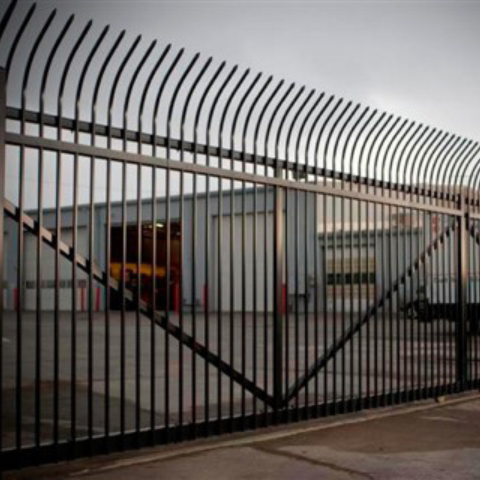
While cybersecurity often takes priority in data centre discussions, physical threats: including vehicle-borne attacks, forced intrusion, and ram-raids: remain significant risks that can cause extensive damage. I always advise clients to protect primary vehicle access points, delivery bays, and service roads with crash-rated gates, bollards, and blockers meeting standards like PAS 68.
Rising bollards offer flexible control for sites with frequent legitimate vehicle access while maintaining the ability to instantly secure the perimeter when threats emerge. I've specified these for data centres where operational flow matters as much as security: you need robust protection without creating bottlenecks during normal operations.
Bespoke Solutions Beat Off-the-Shelf Thinking
No two sites are the same. A suburban edge-of-town data centre faces different challenges to a remote facility, a multi-tenant campus, or a site adjacent to major transport links. That's why I take a consultative, engineered approach: assessing boundary conditions, visibility, ground levels, vehicle access, and operational flow before recommending a solution.
Here are some compelling reasons why bespoke design matters:
Threat profile alignment: A facility processing sensitive government data requires different security measures than a commercial colocation centre. I work with clients to understand their specific risk environment and design accordingly.
Site topology challenges: I've worked on sites with varying ground levels, watercourses, existing structures, and neighbouring properties that all influence perimeter design. Cookie-cutter solutions simply don't work when you're dealing with real-world constraints.
Operational integration: Security measures must support: not hinder: daily operations. Delivery schedules, staff access patterns, emergency vehicle access, and maintenance requirements all need consideration during the design phase.
Future flexibility: Data centres expand. Traffic patterns change. Threat landscapes evolve. I design systems with adaptation in mind so clients can modify and upgrade without starting from scratch.
Reliability, Compliance, and Continuity
Data centres run on uptime. Perimeter security must support that reality: robust components, secure foundations, dependable automation, and maintenance plans that prevent small issues becoming failures. I build systems with longevity in mind, backed by strong warranties and structured maintenance options, so facilities teams can plan confidently and reduce reactive call-outs.
Crucially, everything needs to be installed to a standard that performs long-term. Weak points are usually created by poor detailing, rushed groundworks, or inconsistent installation. Regular patrols and security checks reinforce perimeter integrity, while detailed historical logs support compliance audits and continuous security improvement.
When I specify automated gate systems for data centre access points, I'm looking for reliability under frequent use, integration capability with existing access control infrastructure, and fail-safe mechanisms that maintain security during power failures or system faults. These aren't just gates: they're critical components of your overall security architecture.
Access Control: The Human Element
Robust systems at key portals with anti-tailgating measures, biometric verification for critical points, and protocols ensuring only authorised personnel enter create multiple verification layers. I've worked with clients to design vestibule-style entry points where individuals must pass through one secured door before accessing a second: eliminating the risk of unauthorised persons following authorised staff through access points.
Here's what I recommend for high-security data centre access control:
Multi-factor authentication at all personnel entry points combining cards, biometrics, and PIN codes
Vehicle inspection zones where deliveries and service vehicles undergo security screening before accessing the main site
Visitor management protocols with pre-registration, identity verification, and escort requirements
Emergency egress planning that maintains security while ensuring life safety compliance
The challenge is balancing friction with security. You want enough verification steps to prevent unauthorised access without creating operational bottlenecks that frustrate staff or slow emergency response.
Authority You Can Build On
Fenceways Group Ltd was established in Manchester in 1983 and now operates nationally, with an office in London supporting some of the most demanding postcodes in the country. That blend: decades of practical experience plus the ability to deliver at scale: lets us support complex commercial projects with speed, professionalism, and accountability.
I've watched this industry evolve from basic chain-link fencing to sophisticated integrated security systems. What hasn't changed is the fundamental principle: perimeter security is about creating layers of protection that work together intelligently. Whether you're planning a new build, an upgrade, or a security review, start at the boundary.
The infrastructure of tomorrow: the data centres powering our digital economy, supporting critical services, and handling sensitive information: deserves perimeter security designed with the same sophistication as the technology inside. I will work with you to assess your specific requirements, understand your operational constraints, and design a perimeter security system that provides genuine protection without compromising functionality.
Because when it comes to protecting critical infrastructure, the perimeter is where resilience begins. And after 40 years of practical experience securing some of the UK's most demanding sites, I know that the difference between adequate security and genuine protection lies in the details: the engineering, the integration, the installation quality, and the long-term support that keeps your perimeter performing when it matters most.
If you're involved in planning, upgrading, or reviewing security for data centre projects, I encourage you to start the conversation early. Perimeter security is most effective: and most cost-efficient: when it's integrated into site design from the beginning rather than retrofitted after construction. Visit our website to discuss how we can support your project with the expertise that comes from four decades of securing the UK's critical infrastructure.


Comments